
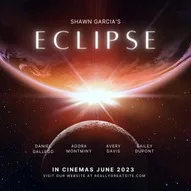
From ancient times to the modern world, eclipses have always fascinated the human heart. When the Sun, Moon, and Earth align in perfect harmony, a cosmic drama unfolds in the sky. For some, it is a purely scientific phenomenon. For others, it is a sign of spiritual transformation or divine message. No matter how you see it, eclipses remind us that the universe is alive, mysterious, and deeply connected with our lives.
What is an Eclipse?
An eclipse occurs when one celestial body moves into the shadow of another. There are two main kinds:
• Solar Eclipse – When the Moon blocks the Sun’s light.
• Lunar Eclipse – When the Earth’s shadow falls on the Moon.
These events happen a few times every year, but only certain regions of the Earth can witness them. Each eclipse has its own beauty, mystery, and meaning.
Solar Eclipse – A Temporary Night in Day
A solar eclipse is one of the rarest and most breathtaking sights. Imagine standing under the Sun in the middle of the day, and suddenly the sky darkens, the temperature drops, and a strange silence spreads. Birds stop singing, and people look up in awe as the Moon perfectly covers the Sun.
There are three kinds of solar eclipses:
• Total Solar Eclipse – The Moon completely covers the Sun, showing the glowing “corona,” a crown of light.
• Partial Solar Eclipse – Only a portion of the Sun is blocked.
• Annular Eclipse – The Moon appears smaller, leaving a fiery golden ring in the sky, called the “Ring of Fire.”
Astrologically, solar eclipses are seen as times of new beginnings, sudden changes, and fresh energy. They can bring hidden truths to light and open doors that were once closed.
⸻
Lunar Eclipse – The Blood Moon
A lunar eclipse happens when the Earth comes between the Sun and the Moon. Unlike a solar eclipse, this can last for hours and is completely safe to watch without any equipment.
During a total lunar eclipse, the Moon takes on a magical reddish color, often called the “Blood Moon.” This happens because Earth’s atmosphere bends sunlight, scattering blue light and letting red hues reach the Moon.
Types of lunar eclipses include:
• Total Lunar Eclipse – The whole Moon turns red.
• Partial Lunar Eclipse – Only part of the Moon is darkened.
• Penumbral Eclipse – The Moon only dims slightly, almost like a shadow passing over it.
Cultural and Spiritual Beliefs
Throughout history, eclipses were seen as omens. Ancient civilizations feared them, thinking they were warnings from the gods. In many cultures, people performed rituals, fasted, or prayed during eclipses. In astrology, both solar and lunar eclipses are considered turning points—moments that can bring powerful changes in destiny.
Even today, people use eclipses as times of meditation, reflection, and setting intentions. Spiritually, they remind us that light and shadow are both part of life, and that endings are often the beginning of something new.
Why Eclipses Matter
From a scientific view, eclipses help astronomers study the Sun, Moon, and Earth more closely. From a spiritual view, they invite us to pause, release what no longer serves us, and embrace new possibilities.
Eclipses show us that even in darkness, beauty exists. The shadow may fall, but it never lasts forever. Light always returns.
Final Thought
Whether you look at them through the eyes of a scientist or the heart of a seeker, eclipses are gifts from the universe. They connect us with the mysteries of the cosmos, inspire wonder, and remind us of the delicate balance that sustains life on Earth. Next time an eclipse graces the sky,